
← Knowledge CenterAutism & Learning Disabilities
Activities to Support People with Autism
4 January 2024 · 6 min read
Article content
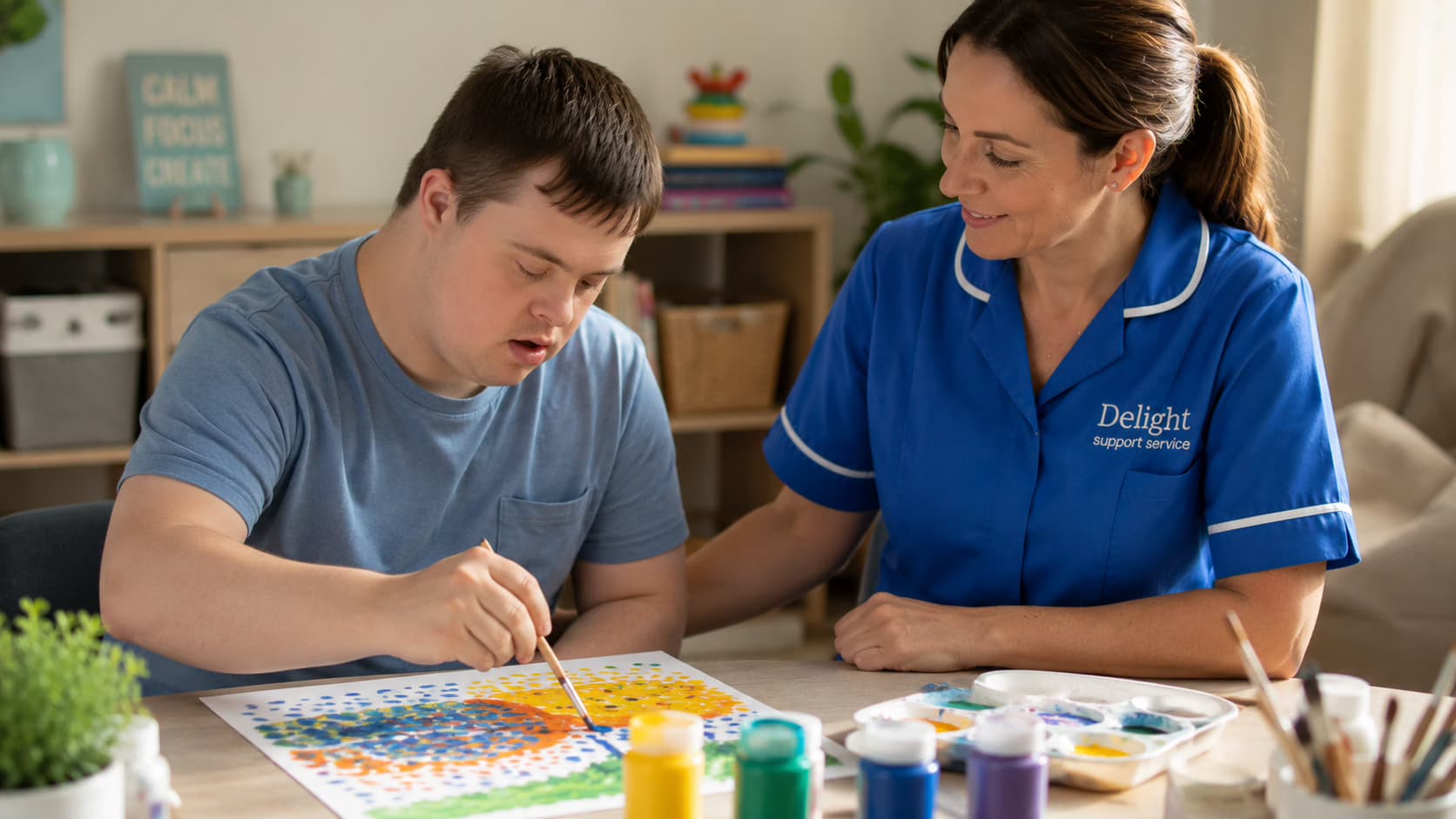
Supporting individuals with autism involves understanding their sensory needs, communication styles, and interests. The activities below are designed to encourage development, build confidence, and promote wellbeing in a structured and inclusive way.
1. Sensory-Friendly Spaces
- Create spaces with calming colours, soft lighting, and comfortable seating.
- Provide sensory tools such as fidget spinners, stress balls, or textured objects.
2. Art and Creativity
- Offer art and craft activities, allowing individuals to express themselves through various mediums.
- Focus on process-oriented art, emphasising the experience rather than the end product.
3. Social Skills Groups
- Facilitate structured groups to help individuals practise and improve social interactions.
- Use activities to teach turn-taking, sharing, and communication skills.
4. Music Therapy
- Engage individuals in music therapy incorporating instruments, singing, and rhythm activities.
- Music can be a powerful tool for self-expression and emotional regulation.
5. Structured Playtime
- Implement structured play activities to help with routine and predictability.
- Use visual schedules and timers to assist transitions between activities.
6. Physical Activities
- Introduce activities such as yoga, swimming, or adapted sports.
- Physical exercise contributes to overall wellbeing and helps with sensory regulation.
7. Storytelling and Social Stories
- Use social stories to explain social situations and expectations.
- Engage in storytelling activities, encouraging individuals to share their own stories.
8. Technology and Apps
- Explore educational and interactive apps designed for individuals with autism.
- Technology can be a useful tool for learning, communication, and engagement.
9. Nature Exploration
- Take nature walks or engage in outdoor activities to promote sensory experiences.
- Natural settings can provide a calming and grounding environment.
10. Cooking and Baking
- Involve individuals in simple cooking or baking activities.
- An enjoyable way to practise following instructions and developing fine motor skills.
11. Animal-Assisted Therapy
- Incorporate interactions with trained therapy animals, which can have calming and therapeutic effects.
- Ensure animals are specifically trained to work with individuals with additional needs.
12. Visual Supports
- Use visual schedules, social stories, and visual cues to enhance communication.
- Visual aids provide structure and reduce anxiety.
13. Community Outings
- Plan outings to community spaces, gradually introducing different environments.
- Prepare for outings with visual supports and social narratives.
14. Games and Puzzles
- Engage in board games or puzzles that encourage cognitive development.
- Choose games that match the individual's interests and abilities.
15. Technology-Assisted Communication
- Explore augmentative and alternative communication (AAC) devices or apps.
- These tools support non-verbal individuals in expressing themselves.
16. Life Skills Training
- Provide opportunities to learn and practise daily life skills such as cooking, cleaning, and personal hygiene.
- Gradually increase the complexity of tasks based on individual abilities.
17. Social Events
- Organise social events with a focus on accommodating sensory sensitivities.
- Provide quiet spaces for individuals to retreat if needed.
18. Therapeutic Play
- Incorporate therapeutic play activities such as sand or water play.
- These activities are relaxing and provide valuable tactile stimulation.
19. Role-Playing
- Use role-playing scenarios to practise social situations and problem-solving.
- This enhances social skills in a controlled and supportive environment.
20. Adapted Reading Programmes
- Offer reading programmes tailored to individual reading levels and interests.
- Use visual supports to aid comprehension.
When implementing these activities, it is crucial to consider each individual's preferences, sensitivities, and communication styles. Personalising activities and providing a supportive, inclusive environment are key factors in effectively supporting individuals with autism.